
Introduction
Knee pain is a common ailment that affects people of all ages and backgrounds. Whether you’re an athlete, a desk worker, or an active individual, you might have experienced knee discomfort at some point in your life. What many people don’t realize is that knee pain is often not an isolated issue with the knee itself. Instead, it frequently serves as a symptom of underlying problems, particularly related to the ankle and hip joints. In this article, we will explore why knee pain is often linked to issues elsewhere in the body, and how it can be attributed to overcompensation of specific muscles due to limitations in ankle and hip mobility, along with stability concerns.
Understanding the Anatomy
Before delving into the relationship between knee pain and ankle/hip issues, it’s essential to understand the complex interplay of joints and muscles in the lower extremities.
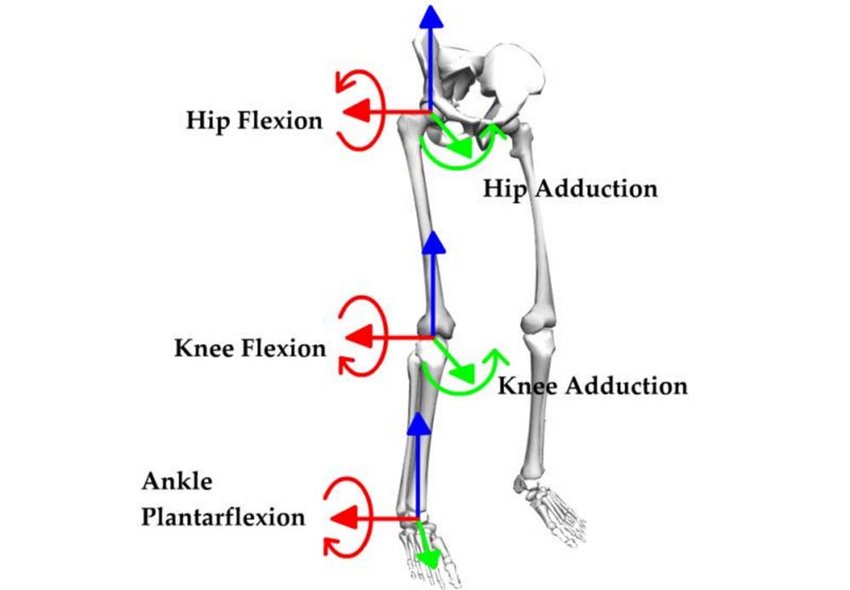
- The Knee Joint: The knee is a hinge joint that connects the thigh bone (femur) to the shin bone (tibia). It is primarily responsible for flexion and extension of the leg.
- The Ankle Joint: The ankle joint allows for dorsiflexion (bringing the top of the foot toward the shin) and plantarflexion (pointing the foot downward). It consists of various bones and ligaments.
- The Hip Joint: The hip joint is a ball-and-socket joint connecting the thigh bone to the pelvis. It provides a wide range of motion, including flexion, extension, abduction, adduction, and rotation.
The Knee as a Symptom
Many individuals who experience knee pain often mistake the knee itself as the source of the problem. However, knee pain is typically a result of other issues within the kinetic chain of the lower extremities. Here’s how it works:
- Ankle Mobility: Limited ankle mobility can force the knee to compensate for the lack of movement. When the ankle cannot flex adequately, the knee might have to overextend during activities such as squatting or walking, leading to increased stress on the knee joint. The muscles that commonly overcompensate for poor ankle mobility include the quadriceps and the iliotibial band (IT band).
- Hip Mobility: Similarly, inadequate hip mobility can cause problems. When the hip joint cannot move freely, the knee may be forced to perform movements it isn’t designed for. The gluteus medius, in particular, is a muscle that often tries to make up for hip mobility limitations, potentially leading to knee pain.
- Lack of Stability: Stability in the lower extremities is crucial for proper biomechanics. Weakness in the muscles that support the knee, such as the vastus medialis obliquus (VMO) and the hamstring muscles, can lead to instability, increasing the risk of knee injuries and pain.
Common Symptoms of Knee Pain
Knee pain associated with issues in the ankle and hip may manifest as:
- Pain on the outer side of the knee: This can be a result of IT band syndrome due to poor hip stability or ankle issues.
- Anterior knee pain: Pain in the front of the knee is often linked to overuse or overcompensation caused by limited ankle mobility.
- Medial knee pain: Problems with hip mobility can lead to pain on the inner side of the knee.
Addressing Knee Pain
To address knee pain effectively, it’s crucial to identify and address the root causes:
- Mobility exercises: Incorporate ankle and hip mobility exercises into your routine to improve joint range of motion. Stretching and foam rolling can be beneficial.
- Strength training: Target the muscles around the knee, hip, and ankle to improve stability. Exercises like squats, lunges, and leg lifts can help strengthen these areas.
- Proper footwear: Ensure you have appropriate footwear that supports strengthening of the feet and provides stability, especially if you have foot or ankle issues.
- Consult a professional: If your knee pain persists, consult a physical therapist or orthopedic specialist for a comprehensive evaluation and personalized treatment plan.
Conclusion
Knee pain is often a symptom of underlying issues with ankle and hip mobility, along with stability concerns. Understanding the complex interplay of joints and muscles in the lower extremities is essential for effective pain management and prevention. By addressing these root causes, you can not only alleviate knee pain but also improve overall lower limb function, promoting a healthier and more active lifestyle.
References:
- Powers, C. M. (2003). The Influence of Abnormal Hip Mechanics on Knee Injury: A Biomechanical Perspective. Journal of Orthopaedic & Sports Physical Therapy, 33(11), 639-646.
- Wilk, K. E., & Macrina, L. C. (2014). Nonoperative Rehabilitation for Patellofemoral Pain and Postural Control Impairments. Clinics in Sports Medicine, 33(3), 525-553.
- Claiborne, T. L., Armstrong, C. W., Gandhi, V., & Pincivero, D. M. (2006). Relationship Between Hip and Knee Strength and Knee Valgus During a Single Leg Squat. Journal of Applied Biomechanics, 22(1), 41-50.
 The Breathing Space
Leave a comment