

Title: The Kipping Pull-Up: Unveiling Its Meaning and Merits
Part 4: The Kipping Conundrum
In our journey to master the pull-up, we’ve dissected various aspects, from form and grip to ankle placement. Now, in part four of our series, we venture into the realm of kipping pull-ups, a technique popularized by CrossFit, and address the debate surrounding its meaning and merits.
The Kipping Pull-Up: A Gymnastic Move
Before delving into the controversy, let’s clarify what a kipping pull-up is. A kipping pull-up is a dynamic, swinging variation of the traditional pull-up that incorporates momentum generated by the hips and legs to assist in completing the exercise. This movement has deep roots in gymnastics and is considered a gymnastic skill rather than a pure strength exercise.
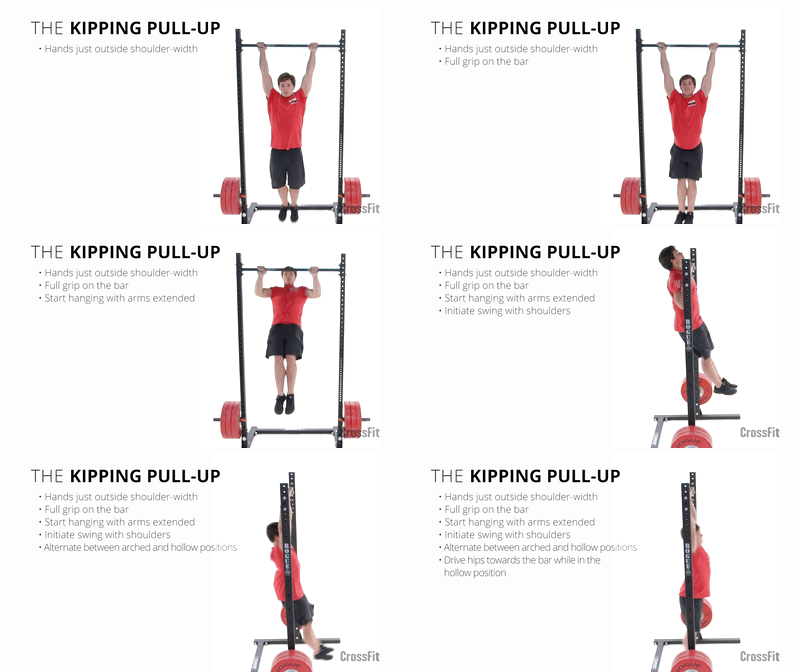
The Controversy
Kipping pull-ups have sparked debate in the fitness world. Traditionalists argue that they compromise the purity of the pull-up by using momentum, and therefore, they lack the same strength and hypertrophy benefits as strict pull-ups. However, it’s essential to recognize that kipping pull-ups are not meant to replace strict pull-ups but to serve a different purpose.
The Benefits of Kipping
- Dynamic Movement: Kipping pull-ups emphasize a dynamic, full-body movement that challenges coordination, agility, and cardiovascular endurance. They can be an excellent addition to a well-rounded fitness routine.
- Functional Fitness: CrossFit and other functional fitness programs value kipping pull-ups for their relevance to real-world movements, such as climbing over obstacles or pulling oneself up in challenging situations.
- Variation: Incorporating kipping pull-ups into your routine can provide variety and prevent training plateaus. They engage different muscle groups and offer a fresh challenge.
Evidence-Based Insights
To shed light on the debate, let’s consider a study published in the International Journal of Sports Science & Coaching (2014). This research analyzed the physiological differences between strict and kipping pull-ups. The study found that while strict pull-ups primarily engage the back, arms, and core muscles, kipping pull-ups involve a broader range of muscles and result in higher heart rate responses, suggesting a cardiovascular benefit (Da Silva et al., 2014). This evidence supports the idea that kipping pull-ups serve a unique purpose in fitness.
Conclusion
The kipping pull-up remains a subject of debate among fitness enthusiasts, but it’s essential to view it in the right context. While it may not offer the same traditional benefits of strength and hypertrophy as strict pull-ups, it has its place in the world of fitness. Kipping pull-ups challenge dynamic movement, coordination, and functional fitness, making them a valuable addition to certain training regimens.
Incorporating both into your routine can provide a well-rounded approach to pull-up training, ensuring you reap the unique advantages of each. The key is to understand the purpose of each variation and use them accordingly to achieve your desired fitness outcomes.
Stay tuned for the next installment of our series, where we’ll explore advanced pull-up variations and techniques to help you continue your journey toward pull-up mastery.
 The Breathing Space
Leave a comment